
A GST roll-out by April 1 looks difficult, giving the companies some succour.
If the government tries to bring in real estate under GST now, it will be a typical case of biting more than what one can chew, says Sukumar Mukhopadhyay.

New GST rates are between 5-18% on sectoral products
GST implementation could happen in September itself, with the next meeting of the Union Cabinet likely to take up the matter.

'There is a difference between a politician and leader.' 'A politician will have his pound of flesh first and do everything else later.' 'A leader will sacrifice everything to help people.'

Singapore's single-rate GST structure cannot be India's model. But its practice of early announcement of rates much before their implementation should be emulated by India, says A K Bhattacharya.
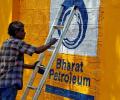
BPCL is a high revenue-earning public-sector undertaking (PSU) and plans to privatise it are completely off the table, Petroleum and Natural Gas Minister Hardeep Singh Puri said on Tuesday after assuming charge of the ministry for the second time. "Why would we divest ourselves of highly successful Maharatnas like BPCL," Puri said, arguing the Centre was not in favour of divesting its stake in oil PSUs.

The empowered committee of state finance ministers has virtually trashed the Thirteenth Finance Commission taskforce's Goods and Services Tax report.

The panel suggested inclusion of alcohol and petroleum products in GST, as is being demanded by the Congress.

'I am shocked that the BJP makes so many commitments. What did they deliver as the NDA?'
Bihar Deputy Chief Minister Sushil Kumar Modi said, a hike in GST rates would have hampered consumption amid the economic slowdown. The revenue augmentation panel in the Council meeting recently recommended revisiting and restructuring the GST rate slabs, besides correcting the inverted duty structure. The panel listed 24 items, including mobile phones, footwear, fabrics, LED light, medical equipment, utensils, agri machinery, pharma, and renewable components, which have an inverted duty structure, resulting in refunds of close to Rs 20,000 crore annually.

The rising goods and services tax (GST) and personal income-tax collections may bolster the Narendra Modi government's ability to announce new schemes or enhance existing ones.

The GST rate for the sector has not yet been finalised by the government.

There have been complaints from consumers that the firm has increased the base price of products and then charged the lower GST rate, thereby keeping the MRP of products the same in pre and post tax rate cut.

The GST rates for all but six items were finalised at the first day of the two-day meeting of the GST Council, headed by Union Finance Minister Arun Jaitley and comprising state representatives.

The opposition parties vehemently criticised the new 'one nation, one tax' system having four different rates instead of a single rate adopted in some countries including the UK and Singapore.
He will succeed Kerala Finance Minister K M Mani.
False and acrimonious debates such as Modi versus Manmohan might allow for victories that are political and partisan. But the real loser is the nation, India and Bharat, notes Arvind Subramanian, former chief economic advisor to the Modi government in its first term.

'Every year, the marble industry is shrinking due to tiles. It has already decreased by 20-25 per cent in recent years.'
The fiscal gains from implementing the GST and demonetisation, while almost certain to occur, will probably take time to be fully realised

When the landslide hit, Sruthi's house was washed away, along with its inhabitants. She lost her entire family and some relatives. All she had left for a close confidante was her fiance Jenson. Days after the landslide and the loss of her family, Jenson died in a road accident that also left Sruthi with serious injuries. News of the accident and Sruthi's backdrop as the lone surviving member of a family wiped out in the July landslide, was picked up by the media, and people rushed to help.
Close to 202,000 new entities have registered under the GST Network

The BJP leadership is understandably mulling all options on the roll-out of the GST.

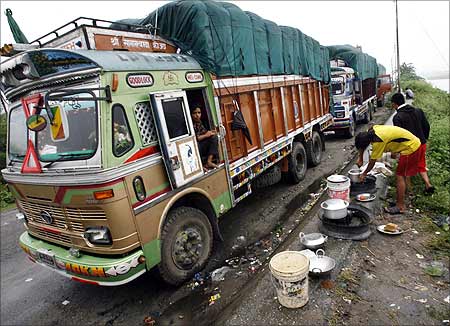
Beside flying squads from RTOs at different points on highways, challans are imposed without any reason. The situation is especially difficult in states like Uttar Pradesh, Rajasthan, Madhya Pradesh, Maharashtra, Gujarat, and Andhra Pradesh.
There are both positive and negative impacts of the tax, but the net result for India's infrastructure sector is advantageous, says Vinayak Chatterjee.

Jaitley said the GST Composition Scheme, under which small traders and businesses pay a 1 per cent tax based on turnover, can be availed by businesses with a turnover of Rs 1.5 crore, against the earlier Rs 1 crore, with effect from April 1.

Jaitley said the Congress may be upset with the government for 'political reasons'
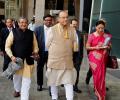
The government is going all out to spread awareness about the new indirect tax regime, and training lawmakers is being seen as a necessary first step.
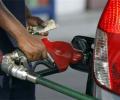
The Centre would need the concurrence of 20 states out of 29 to impose a GST on petroleum

The goods and services tax will level the playing field for different sectors of industry, including domestic manufacturing.

The company will operate the IT system for five years.

Maharashtra raises vehicle registration fee, Tamil Nadu ups entertainment tax
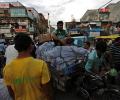
The price of ensuring no disruption after rolling out the GST seems to be an imperfect GST with many relaxations in its compliance norms, says A K Bhattacharya.

Plug-in hybrids have two engines and the electric part has a much larger battery than in the regular hybrids. Car companies, led by the Japanese, are pushing the Indian government to look at hybrids in the interim if it wants to reduce carbon emission.
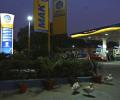
Petroleum being out of the goods and services tax initially will create some anomaly as tax credit on some of the inputs to oil industry may not be given, said revenue secretary Hasmukh Adhia.
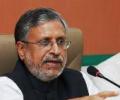
Sushil Kumar Modi, who ceased to be Bihar Finance Minister following the JD (U)-BJP split, on Monday resigned as Chairman of the Empowered Committee of State Finance Ministers looking into the implementation of the proposed new indirect tax regime - Goods and Services Tax (GST).

'GST is imperative for India's success.' 'Without GST India will be a less competitive country.'
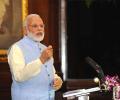
Prime Minister Narendra Modi addressed the nation at the Central Hall of Parliament ahead of the GST launch at midnight. Here are highlights from the PM's speech

The list of exempted goods from central excise duty has shrunk from 400 items in 2011-12 to 300 now.
